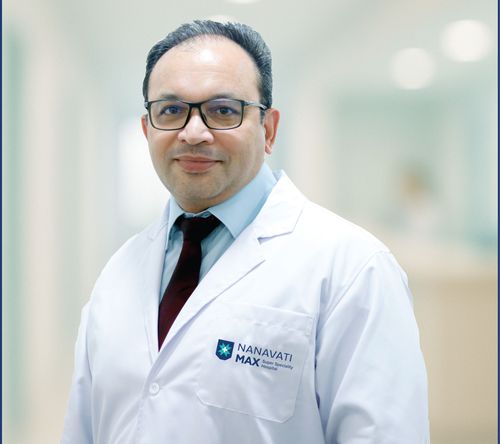
Our Medical Experts
Nanavati Max Hospital is home to eminent doctors in the world, most of whom are pioneers in their respective fields. Additionally, they are renowned for developing innovative and revolutionary clinical procedures.
Find a DoctorEmergency:
Helpline:

The Centre for Haematology & Bone Marrow Transplant in Mumbai is an integral part of Nanavati Max Super Speciality Hospital - one of India’s largest, private sectors, quaternary care hospitals. The centre aims to provide easy access to Bone Marrow transplants as a possible cure for patients with complex blood disorders.
Our dedicated and internationally recognised transplant specialists embrace the values of innovation, collaboration, confidentiality, empathy, integrity, and focus on providing comprehensive care to all patients. We have a combined experience of performing hundreds of transplants successfully for patients coming from all across the globe.
Our team of professional experts follow a multidisciplinary approach to treat patients with cancer or blood diseases such as leukaemia, Lymphoma, myeloma, and other blood disorders requiring a transplant. We aim at providing each patient (whether an adult or paediatric patient) with a personalized treatment plan tailored to meet their unique, changing needs– before, during, and after the transplant.
The Centre is equipped with ultra-modern infrastructure and a team of highly experienced, internationally trained specialists. It is supported by state-of-the-art transfusion services and advanced laboratories, along with a fully-equipped Radiation Oncology unit. We are also an authorised stem cell collection centre for DATRI Blood Stem Cell Donor`s Registry.
Centre’s Key Features Include:
Department Of Transfusion Medicine
Laboratory Services Offered:
A Full-Service Offering
The Centre for Haematology & Bone Marrow Transplant diagnoses and treats a wide variety of blood disorders and blood cancers, which include all kinds of anaemia, marrow failure syndromes, coagulation disorders, acute and chronic leukaemia, myelomas, lymphomas, myeloproliferative and lymphoproliferative disorders.
The full spectrum of facilities and services we offer include Allogeneic and using bone marrow, peripheral blood stem cells, and cord blood stem cells for various benign and malignant disorders.
A bone marrow transplant is a treatment performed to replace the unhealthy bone marrow of the patient with the healthy bone marrow cells. Bone marrow or peripheral blood stem cell harvesting is the first step towards bone marrow transplant treatments and stem cell therapies performed to treat patients suffering from various blood-related disorders such as leukaemia, lymphoma, and specific autoimmune disorders.
Bone marrow is a soft and spongy substance that is present between the inner cavities of bones, from where the blood is produced. There are several tiny spaces in the bone marrow that hold the primitive cells which are capable of growing into a different type of blood cells. These cells are called stem cells, which are capable of producing various kinds of blood cells, i.e. red blood cells, white blood cells, and platelets.
In general, there are two types of bone marrow, red and yellow. Most of the bone marrow in kids is red marrow and rich in stem cells. However, in adolescents, owing to fat cell infiltration, a big part of the bone marrow is transformed into yellow marrow. In adolescents, red marrow is generally confined to a few bones, such as hip bones, breast bone, ribs, shoulder blades, skull, backbone, arm, and thigh ends.
The detection of blood cancers and their treatment with chemotherapy and other modalities is required as per the case.
The Bone marrow transplant process may vary depending upon the types of donor and transplant procedures. Generally, there are two types of transplant processes:
After the harvest, the bone marrow or stem cells are filtered to remove fat or other particles and then taken to the laboratory for processing, after which they are counted, screened, and ready to infuse.
The type of transplant patient has to undergo depends upon the unique medical needs of the patient. A Hematologist will evaluate the patient’s medical condition and will suggest the treatment plan accordingly. The goal of a bone marrow transplant process is to treat a variety of blood disorders and certain types of cancer.
BMT process consists of three main phases which include:
Here is all you need to know about your transplant journey. The guide is divided into six steps beginning from how to prepare for the journey and include what to expect along the way.
STEP 1: Preparation: The preparation stage starts when the patient arrives at the BMT Centre with medical assessment, guidance, informed consent and other preliminary activities start.
STEP 2: Bone-Marrow/Stem Cells Harvest: The stem cells are collected either from the bone marrow or peripheral blood by apheresis. In an allogeneic transplant, stem cells are collected from the donor and in case of an autologous transplant from the patient itself.
STEP 3: Conditioning: The first step towards transplantation starts with the conditioning stage. In this process, either chemotherapy or radiation therapy or a combination of both is given to the patient. Chemotherapy and radiation therapy are given in doses that demolish the bone marrow function and result in the greatest possibility of destroying the disease. Some conditioning treatment may be administered in the outpatient environment depending on the chemotherapy agents and radiation therapy administration schedule, thus possibly shortening the inpatient stay. The preparation, stem cell harvest and conditioning all together comprises of the pre-BMT phase.
STEP 4: Transplant: In this stage, the infusion of donor bone marrow or stem cells takes place right after the conditioning regimen has been finished. This is similar to a blood transfusion. The duration beyond the transplant day is considered as the post BMT phase.
STEP 5: Waiting For Engraftment (New Cell Growth): This stage involves close monitoring, supporting therapy, and complications management while awaiting indications of grafting.
STEP 6: Engraftment And Early Recovery: Signs that fresh bone marrow or stem cells are grafting (growing and developing) can be anticipated in about 2 to 3 weeks after the transplantation. Close monitoring, supporting care will persist and preparation for the patient's return to home will start.
STEP 7: Long-Term Recovery: This stage involves the discharge of the patient from the centre, discussing any continuing clinical problems, and restoring patterns of life. Patients are advised to take regular follow-ups to avoid any long-term complications.
A bone marrow transplant is a therapeutic procedure wherein damaged or unhealthy bone marrow is substituted with healthy bone marrow stem cells. This treatment addresses specific cancers, blood-related conditions, and certain immune disorders. The source of these remedial stem cells might be an external donor or could be harvested and reintroduced from the patient's own body.
Different types of bone marrow transplants include:
Autologous transplants utilize the recipient's own stem cells.
Allogeneic transplants rely on stem cells from an external donor, like a close relative.
Syngeneic transplants are exclusive to identical twins, and this method employs stem cells from one twin for the other.
Undergoing a bone marrow transplant involves a multi-stage process:
Preparation: Patients initially receive treatments such as chemotherapy or radiation therapy to eliminate the resident bone marrow cells.
Transplantation: Healthy bone marrow stem cells are then intravenously infused. These cells navigate to the bone marrow and generate new blood cells.
While bone marrow transplant procedure has transformed numerous lives, like any other medical procedure, it involves some risks. Potential complications include infections, bleeding events, graft-versus-host disease (GVHD), potential organ damage, and, in rare circumstances, mortality. It's crucial to understand that these risks also depend on individual health profiles, age, and other existing medical conditions.
Selecting a reputable hospital for a bone marrow transplant in Mumbai involves comprehensive research. One should always consider the institution's experience, track record, and patient outcomes. Prospective patients can review the hospital's website, watch patient testimonials, or directly contact the hospital for insights into their bone marrow transplant program.
Nanavati Max Hospital is home to eminent doctors in the world, most of whom are pioneers in their respective fields. Additionally, they are renowned for developing innovative and revolutionary clinical procedures.
Nanavati Max Hospital is home to eminent doctors in the world, most of whom are pioneers in their respective fields. Additionally, they are renowned for developing innovative and revolutionary clinical procedures.
Find a DoctorAamir Khan's Visit at Nanavati Max Hospital | The First Successful Hand Transplant Surgery
Treated by Dr. Nilesh G Satbhai, Nanavati Max Super Speciality Hospital, Mumbai
May 15, 2026
Baby Varidhi's Microvascular Reconstruction for Congenital Hand Deformity | Patient Success Story
Treated by Dr. Nilesh G Satbhai, Nanavati Max Super Speciality Hospital, Mumbai
May 8, 2026
A Mother’s Gift: Successful Kidney Transplant of Ms. Mary Pettit
Treated by Dr. Jatin Kothari, Nanavati Max Super Speciality Hospital, Mumbai
Mar 15, 2026
Siddharth Kak Walks Pain-Free After Successful Bilateral Knee Replacement | Patient Success Story
Treated by Dr. Niraj Vora, Nanavati Max Super Speciality Hospital, Mumbai
Apr 30, 2026
Mrs Ridula Dev Narayan Successfully Recovered from Cervical C3 Prolapse
Treated by Dr. Amandeep Gujral, Nanavati Max Super Speciality Hospital, Mumbai
Feb 28, 2026
Mr. Abdul Jeetu’s Pancreatic Cancer Recovery
Treated by Dr. Ganesh Nagarajan, Nanavati Max Super Speciality Hospital, Mumbai
Mar 31, 2026
Mr. Anglade Bindjeme’s Recovery with HoLEP Surgery for Enlarged Prostate
Treated by Dr. Avanish Arora, Nanavati Max Super Speciality Hospital, Mumbai
Feb 16, 2026
Mr Rajibul Islam’s Recovery From Complex Liver Metastases
Treated by Dr. Ganesh Nagarajan, Nanavati Max Super Speciality Hospital, Mumbai
Apr 15, 2026
Successful Recovery from Triple Positive Breast Cancer Metastasis
Treated by Dr Vaibhav Choudhary, Nanavati Max Super Speciality Hospital, Mumbai
Jan 31, 2026
10-year-old Anant Jethale Successfully Recovered from Wilson’s Disease
Treated by Dr. Aniket Deshmukh, Nanavati Max Super Speciality Hospital, Mumbai
Jan 15, 2026
Aamir Khan's Visit at Nanavati Max Hospital | The First Successful Hand Transplant Surgery
Treated by Dr. Nilesh G Satbhai , Nanavati Max Super Speciality Hospital, Mumbai
Jan 15, 2026
View all